What Can be Done When the Flowability of a Refractory Castable Drops Sharply After the Addition of Steel Fibers?
The addition of steel fibers leads to a sharp decline in fluidity. Rather than simply increasing the dosage of water-reducing agents, a more fundamental solution lies in the synergistic optimization of aggregate gradation. The primary challenges introduced by steel fibers are physical in nature—specifically “spatial interference” and “internal friction”—rather than merely poor particle dispersion. Relying solely on the chemical dispersing effect of water-reducing agents often addresses only the symptoms rather than the root cause, and may even lead to adverse side effects.
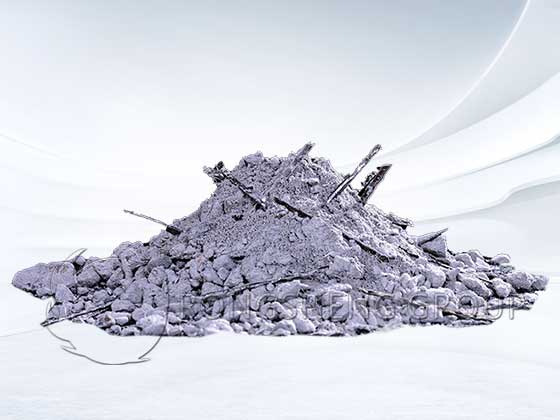
The Root Cause of Reduced Flowability: Physical Interference, Not Poor Dispersion
When steel fibers are incorporated, they form a three-dimensional, randomly oriented network among the aggregate particles. A mismatch between aggregate particle size and fiber dimensions exacerbates two negative effects: if the aggregate is too coarse, fibers struggle to orient themselves freely within the gaps, leading to excessive spacing and reduced reinforcement efficiency; conversely, if the aggregate is too fine, fibers tend to cluster and entangle with one another, directly hindering the relative sliding of particles. This increase in internal friction—caused by fiber “bridging” and entanglement—is the primary reason for the sharp loss in flowability, a physical, mechanical entanglement that water-reducing agents (superplasticizers) cannot effectively resolve.
Comparing the Applicability of Two Solutions
Solution 1: Optimizing Aggregate Gradation (The Fundamental Approach). This is the preferred method for eliminating fiber-related interference. By adjusting the proportions of coarse, medium, and fine particles, one can create sufficient “room for movement” for the steel fibers. Certain patented technologies address fiber entanglement by simultaneously adjusting both the steel fiber specifications and the particle size distribution of the refractory material, thereby restoring flowability while maintaining or even increasing the fiber dosage.
In practice, one might consider a three- or four-level gradation strategy—incorporating coarse particles (1–5 mm), medium particles (0.1–1 mm), and fine powder (<0.088 mm)—to strike an optimal balance between packing density and fiber dispersion.
Solution 2: Increasing the Dosage of Water-Reducing Agents (Requires Extreme Caution). The mechanism by which water-reducing agents function is to release “trapped” (ineffective) water held within agglomerated structures, rather than to act as a direct lubricant for the fibers. In steel-fiber-reinforced castables, simply increasing the dosage of a water-reducing agent carries distinct risks:
Inducing Segregation: An excess of water-reducing agents can cause the cementitious paste to separate from the aggregates, leading to severe segregation and compromising the stability of fiber distribution.
Diminishing Returns: Beyond a certain threshold, further increasing the dosage has a negligible effect on mitigating the loss of flowability caused by the mechanical entanglement of fibers. Typically, the recommended dosage range is 0.2%–0.5%; the precise amount must be determined strictly through experimental testing.
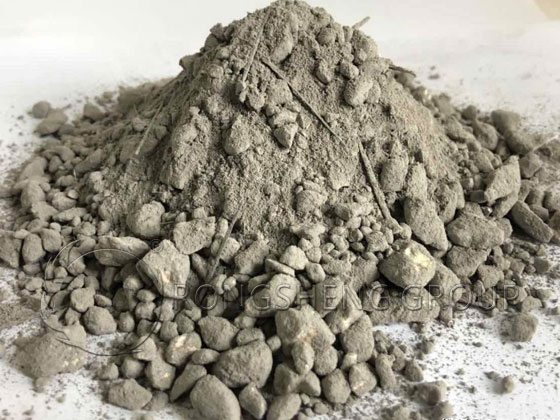
Recommended Solution and Sequence of Operations
Step 1: Begin with an assessment of the aggregate gradation. Before adjusting the water-reducing admixture (superplasticizer), maintain the current dosage and water-to-binder ratio, and focus solely on fine-tuning the aggregate gradation. Specifically, check whether the proportion of intermediate-sized particles (approximately 0.1–1 mm) is too low. This size range is critical for buffering the interference between coarse aggregates, steel fibers, and fine particles. For initial testing, consider using a “3:4:3” ratio framework or a similar distribution.
Step 2: If the flowability remains insufficient after adjusting the gradation, proceed to fine-tune the water-reducing admixture. Using flow values (e.g., a self-leveling spread of 120–180 mm) as a control metric, conduct a gradient test for the admixture dosage. Crucially, avoid simply adding more water to improve flowability; excess water creates voids upon drying, which compromises both strength and resistance to erosion.
Step 3: Evaluate the steel fiber parameters. If results remain unsatisfactory after optimizing both the gradation and the admixture dosage, re-examine whether the equivalent diameter and length of the steel fibers are compatible with the maximum aggregate size. Research has shown that fibers with an equivalent diameter of 0.35–0.45 mm and a length of 15–25 mm can serve as a useful reference for compatibility. If fibers are too long or too thick, the requirements for the gradation’s tolerance—and its ability to accommodate these fibers—increase significantly.
In summary, the adjustment sequence should be: “first address the gradation (physical space), then the water-reducing admixture (chemical dispersion), and exercise great caution regarding water content.” Reconfiguring the aggregate gradation is the structural prerequisite for accommodating steel fibers and restoring flowability, while fine-tuning the water-reducing admixture should serve only as a supplementary measure, contingent upon a well-optimized gradation.
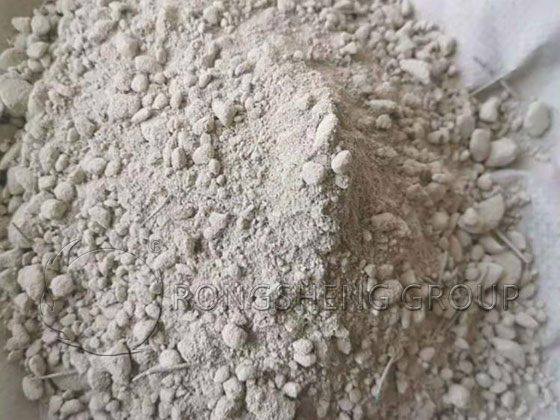
What is the suitable temperature range for using steel-fiber-reinforced refractory castables?
Steel-fiber-reinforced refractory castables are suitable for use at temperatures below 1350°C. If the temperature exceeds 1350°C, the steel fibers will bend, rendering them ineffective. Therefore, steel fibers should not be added to furnace linings intended for temperatures above 1350°C.
Steel fibers are produced by cold-drawing 301 or 304-grade steel into wires. Ideally, they should be incorporated into the castable at a concentration of 1.5% or less. Once added, the fibers form an interlocking, randomly oriented network within the refractory material; their unique shape enhances the material’s internal cohesion. This is particularly effective in preventing cracking and resisting the spalling or detachment of the refractory lining caused by frequent temperature fluctuations.
In practice, steel fibers of varying grades can be incorporated into high-alumina, low-cement refractory castables. However, the dosage must be carefully controlled; an excessive amount can be counterproductive. Steel fibers can also be added to certain types of castable refractories, such as mullite-based castables. These materials are highly versatile, as the inclusion of steel fibers improves the tensile strength, wear resistance, and compressive strength of the refractory castable.
Steel-fiber-reinforced castables come in various grades and quality levels. They are manufactured with different alumina contents and bulk densities, tailored to the specific requirements of the furnace lining in question.
Available options include high-alumina castables (with varying alumina content), as well as corundum-mullite and mullite-based castables, with bulk densities typically ranging from 2.4 to 2.8 g/cm³. Generally, castables with higher alumina content and higher bulk density command a higher price but offer a longer service life.
Regardless of the quality of the material, steel fibers should never be used in environments exceeding 1350°C. At such temperatures, they serve no functional purpose; these materials are strictly intended for use below 1350°C.