What is the Thermal Insulation Principle of Lightweight Refractory Bricks?
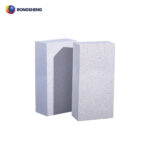
Lightweight refractory bricks are refractory materials characterized by low thermal conductivity and low heat capacity; they are also known as insulating refractory bricks. Typically possessing high porosity and low bulk density, these bricks are frequently referred to as thermal-insulating refractory bricks. Conventional lightweight insulating refractory bricks generally exhibit poor resistance to erosion, low mechanical strength, and limited wear resistance; consequently, they are rarely used directly as working-face materials, but rather as an insulating layer positioned behind the working face. However, the closer these bricks are placed to the working face, the more effective their thermal insulation becomes. With the growing emphasis on energy conservation and emission reduction, there has been significant interest in the development of high-strength, high-temperature-resistant, and erosion-resistant lightweight refractory bricks suitable for direct use on the working face.
Classification of Rongsheng Lightweight Refractory Bricks
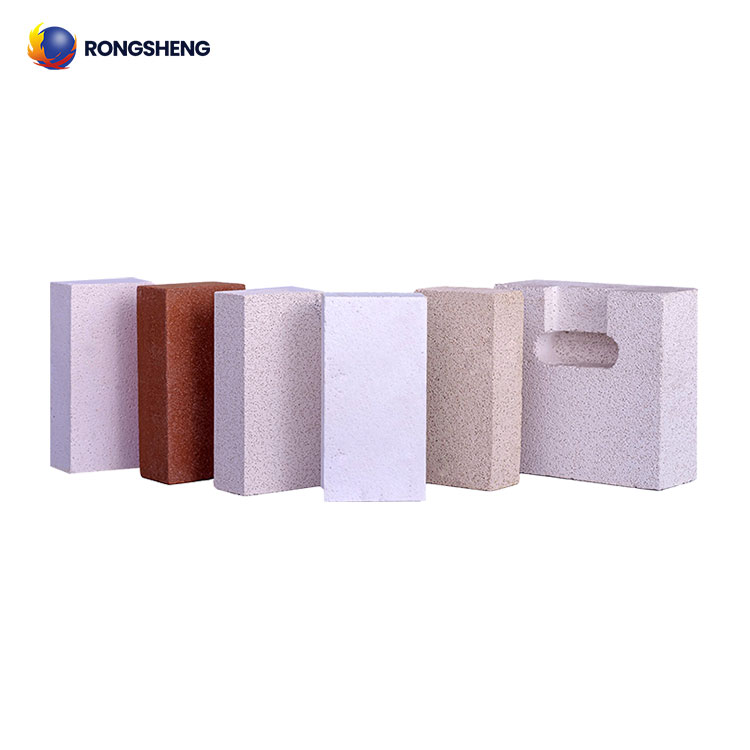
Lightweight refractory bricks—a critical thermal insulation material for industrial kilns and furnaces—can be classified in various ways, based on factors such as chemical-mineral composition, service temperature, physical form, and microstructure.
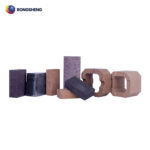
In terms of chemical-mineral composition, the category of lightweight refractory bricks encompasses a diverse range of types, including alumina, high-alumina, mullite, silica, fireclay, vermiculite, and diatomite-based bricks. Each type possesses unique chemical and mineral constituents, which dictate its specific refractory properties and range of suitable applications.
When categorized by service temperature, the classification becomes more granular. Based on the temperature at which the permanent linear change (reheating shrinkage) does not exceed 1%–2%, these bricks are divided into low-temperature (below 600°C), medium-temperature (600–1200°C), and high-temperature (above 1200°C) categories. High-temperature lightweight refractory bricks, in particular, are indispensable for thermal insulation in industrial kilns and furnaces due to their superior insulating performance.
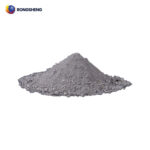
Furthermore, the physical form of the material provides another dimension for classification, distinguishing between granular (powder/particle) forms, shaped (pre-formed) bricks, fibrous forms, and composite lightweight refractory materials. This variety of forms not only addresses the requirements of diverse application scenarios but also highlights the versatility and innovation inherent in refractory material technology.
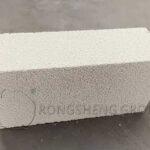
Finally, based on their microstructure, lightweight refractory bricks can be classified into types with a continuous gas phase, a continuous solid phase, or a structure in which both the solid and gas phases are continuous. This classification not only reveals the internal microscopic structural characteristics of the bricks but also provides a scientific basis for gaining a deeper understanding of their performance and optimizing it accordingly. Rongsheng Refractories: Lightweight clay insulating bricks with a bulk density of 1.0/0.8.
Thermal Insulation Principle of Lightweight Refractory Bricks
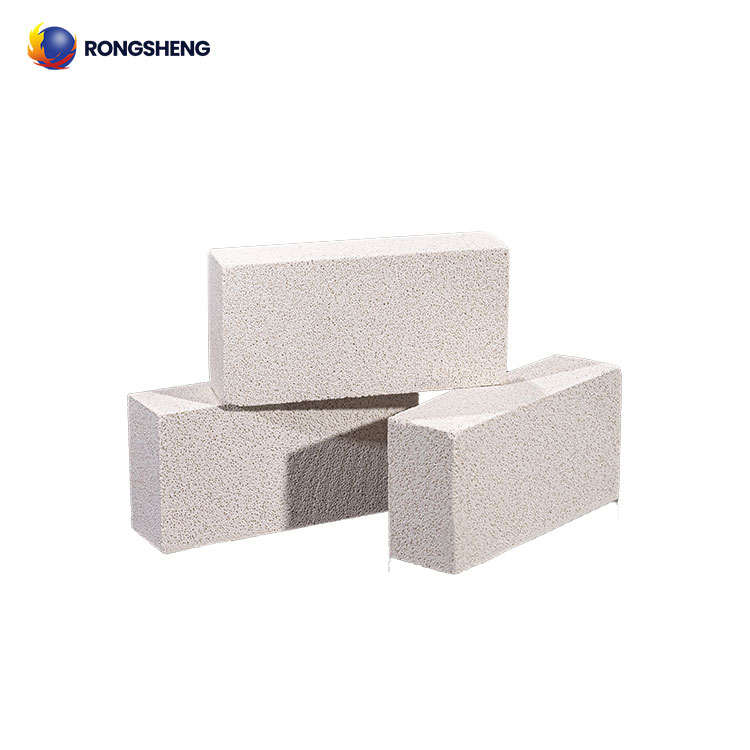
The fundamental principle in the production of lightweight refractory bricks is to reduce the material’s thermal conductivity. Because these bricks contain a large volume of voids (pores), heat transfer occurs through both the solid phase and the gas phase. Heat transfer within the solid phase takes place primarily via conduction, while heat transfer within the gas phase is more complex. As heat moves from a high-temperature zone into the insulating material, it travels through the solid phase until it encounters a pore. At that point, the heat transfer path splits: some heat continues to move through the solid phase, while some enters the pore. For the portion continuing through the solid phase, the path length increases significantly due to changes in the direction of conduction, which effectively raises the thermal resistance. Heat transfer through the pores occurs via gas-phase conduction, convection, and radiation, as detailed below:
- (1) Thermal Conduction: Generally, gases have very low thermal conductivity. In most lightweight refractory bricks, the pores are filled with air, which has a much lower thermal conductivity than solid materials. Consequently, the amount of heat transferred through the pores via conduction is minimal.
- (2) Convective Heat Transfer: Convection relies on the movement of gas. In most lightweight refractory bricks, the pores are so small that the movement of air within them is severely restricted. The resulting gas velocity is extremely low, leading to negligible convective heat transfer. The smaller the pore size, the more restricted the air movement becomes, further reducing heat transfer via convection. When the pore diameter is smaller than the mean free path of the gas molecules, the molecules cease to move, effectively eliminating convective heat transfer.
- (3) Radiative Heat Transfer: Since the pores in most lightweight refractory bricks are filled with air—consisting primarily of nitrogen (N₂) and oxygen (O₂)—which are symmetric diatomic molecules, the gas has a very limited capacity to absorb or emit thermal radiation. Therefore, radiative heat transfer through pores primarily occurs via radiation from the high-temperature walls of the pores to their low-temperature walls. Overall, however, the magnitude of radiative heat transfer through these pores is not particularly significant.
It is evident, then, that the presence of pores contributes substantially to the thermal insulation capacity of lightweight refractory bricks; in many cases, the design of thermal insulation materials centers precisely on the incorporation of such pores.
Selection Strategies for Lightweight Insulating Bricks and Refractory Fiber Boards
Material Classification and Basic Characteristics
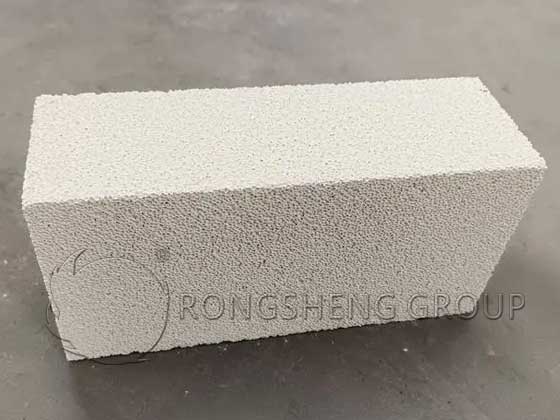
The selection of industrial insulation materials directly impacts the thermal efficiency and service life of kilns and furnaces. Lightweight insulating bricks are categorized by material composition—such as clay-based, high-alumina, mullite-based, or alumina hollow-sphere types—each suited to specific temperature ranges and chemical environments.
Refractory fiber boards encompass a diverse range of materials, including PVC, asbestos, aluminum silicate, calcium silicate, ceramic fiber, and nano-insulation boards. They differ primarily in terms of temperature resistance, erosion resistance, and mechanical strength.
Core Selection Principle: Compatibility with the Working Lining
The choice of insulation material cannot be made in isolation; it must be integrated into a system that complements the working lining (the innermost layer exposed to high temperatures). The core principles are as follows:
- When the working lining consists of refractory castables: Lightweight insulating bricks should be used for the insulation layer. Refractory castables undergo a moisture-removal process after installation; if fiber-based insulation is used, water vapor can easily penetrate the fibers, increasing their thermal conductivity, degrading their insulating performance, and potentially causing the material to crumble.
- When the working lining consists of refractory bricks: Refractory fiber boards are the preferred choice for the insulation layer. Refractory bricks are dimensionally stable following high-temperature sintering and do not release moisture. In this configuration, fiber materials can leverage their advantages—namely, structural integrity and low thermal conductivity—without the risk of failure due to crushing under pressure.
Limitations of Using Lightweight Bricks with a Refractory Brick Working Lining
While it is technically feasible to use lightweight insulating bricks to insulate a working lining made of refractory bricks, this approach presents structural drawbacks. Refractory bricks are dense, heavy materials; during high-temperature operation, the mechanical stress and thermal expansion pressure they exert can crush the lightweight insulating bricks. Once the bricks fracture, the effective thickness of the insulation layer is reduced, and the resulting debris can fill gaps, creating “thermal bridges” that significantly diminish the overall insulation performance.
Performance Comparison and Application Limits
Given comparable material grades, refractory fiber boards generally offer superior thermal insulation performance to lightweight insulating bricks. This is because their fibrous structure effectively suppresses both gas convection and solid-state heat conduction. However, this advantage is conditional:
- Temperature Suitability: Insulation materials must be matched to the specific temperature range; operating beyond these limits can cause fiber shrinkage or the sintering and deformation of lightweight bricks.
- Environmental Suitability: In environments with dust-laden gas flows or high-velocity air, the surfaces of fiber boards may suffer from erosion; in such cases, the superior erosion resistance of lightweight bricks is advantageous.
- Mechanical Loading: Consideration must be given to the load-bearing requirements of the insulation layer itself, as well as any external mechanical loads, in relation to the compressive strength of the fiber board.
There is no absolute superiority between lightweight insulating bricks and refractory fiber boards; their effectiveness depends on their compatibility with the working lining materials and the specific operating conditions. Engineering selection should involve a comprehensive assessment of factors such as the properties of the working lining, operating temperatures, chemical atmosphere, and mechanical stress, ensuring an optimized insulation system through appropriate material matching.