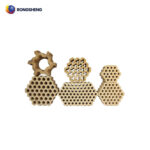
Application of Alumina Bubble Bricks in Industrial Kilns
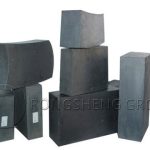
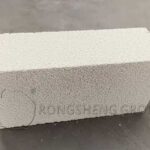
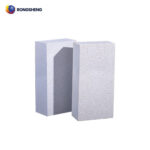
Alumina bubble bricks are made from high-purity α-Al₂O₃ hollow spheres and fine corundum powder as aggregates. They are formed under high pressure and then fired at 1750-1800℃, and are classified into three grades: 85, 90, and 99.
Physicochemical Properties of Alumina Bubble Bricks
- Operating Temperature: Grade 99 has a long-term operating temperature of 1750-1800℃; Al₂O₃ ≥ 99%, with extremely low levels of impurities SiO₂ and Fe₂O₃.
- Bulk Density: 1.4-1.8 g/cm³, only half that of heavy corundum bricks, significantly reducing the overall load on the kiln.
- Thermal Conductivity: 0.3-1.0 W/(m·K) in the 800-1200℃ range, exhibiting significantly better insulation performance than dense corundum bricks and high-alumina bricks, with low heat storage and rapid heating and cooling rates.
- Performance Advantages: Excellent thermal shock resistance, minimal reheat linear variation (≤±0.3%), and strong chemical stability, remaining stable under oxidizing and weakly reducing atmospheres. Its strength surpasses that of aluminosilicate fiber and ordinary lightweight insulating bricks, making it suitable for load-bearing insulation structures (furnace roofs, arched roofs).
- Disadvantages: Cannot directly contact molten steel or slag, or areas subject to strong erosion. Not resistant to long-term corrosion from strongly alkaline molten liquids; in such conditions, it must be used in conjunction with dense corundum bricks for surface protection.
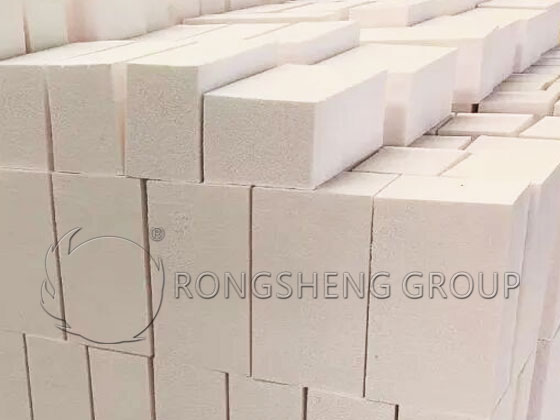
Two Structural Forms for Kiln Construction
-
Hot-face Insulation Layer (Backing Insulation Layer, the Most Common Use)
Heavy working bricks (corundum bricks, mullite bricks) are in contact with the high-temperature flame on the inner side. Alumina Bubble bricks are laid behind the heavy bricks as a permanent insulation layer.
- Function: Blocks heat conduction outward, reduces the temperature of the furnace shell, reduces heat loss, and saves energy by 15%–30%. Reduces the thermal deformation of the furnace steel structure and extends the overall lifespan of the kiln.
- Applicable Parts: Kiln side walls, furnace roof arch, flue, regenerator walls.
-
Direct Working Lining (Hot-face Bricks)
In environments without molten slag or molten metal scouring, only high-temperature flue gas and atmosphere, alumina Bubble bricks are directly used as the working surface of the kiln lining, eliminating the need for a layer of heavy refractory bricks and achieving integrated lightweighting and insulation.
- Widely used in shuttle kilns, down-draft kilns, nitriding furnaces, molybdenum wire furnaces, cathode material sintering furnaces, and experimental high-temperature electric furnaces.
- Construction structure: Furnace shell + insulation cotton (aluminosilicate fiber) + alumina hollow spherical bricks (insulation layer/working layer); under harsh conditions: Furnace shell – fiber – alumina hollow spherical bricks – dense corundum bricks (working surface).
Applications of Alumina Bubble Bricks in Kilns Across Various Industries
-
Metallurgical Industry
- 1) Hot Blast Stove: Used for insulation layers in the dome and upper part of the regenerator of hot blast stoves, replacing traditional high-alumina bricks, reducing heat loss, stabilizing hot blast temperature, reducing gas consumption, and extending the lifespan of the hot blast stove.
- 2) Billet Heating Furnace, Soaking Furnace, Annealing Furnace: Used for insulation linings in the high-temperature sections of the furnace roof and side walls; also used in rapid start-up and shutdown heating furnaces, relying on low-temperature heat storage to shorten heating time.
- 3) Non-ferrous Smelting (Copper, Nickel, Cobalt, Vanadium): Used for linings and insulation layers in the high-temperature sections of roasting furnaces and rotary kilns, resisting corrosion from acidic flue gas.
- 4) Medium-frequency Induction Furnace, Graphitization Furnace: Used for furnace body insulation layers and furnace cover linings.
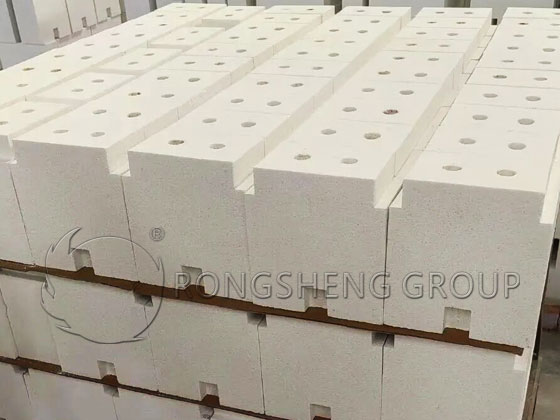
-
Ceramics and Refractory Materials Industry
- 1) High-temperature zone (1500-1700℃) kiln walls and roof of shuttle kilns, pusher kilns, and tunnel kilns. 1. Kilns for firing corundum products, alumina ceramics, zirconia ceramics, and refractory bricks.
- 2) Downdraft kiln arch: lightweight, with less stress on the arch structure, reducing the risk of arch collapse.
-
Petrochemical and Coal Chemical Industries
- 1) Water-coal slurry gasification furnace, carbon black reactor, and pyrolysis furnace lining insulation layer: resistant to high-temperature reducing atmosphere and hydrocarbon flue gas corrosion.
- 2) Hydrogen production furnace, high-temperature tubular furnace, and reactor insulation layer.
-
New Energy and New Materials Industry
- 1) Lithium-ion battery ternary and lithium iron phosphate cathode sintering rotary kilns and pusher kilns; avoid impurity contamination of cathode powder (99% high-purity alumina hollow ductile iron has extremely low impurities).
- 2) Photovoltaic silicon material purification furnace, aluminum nitride and silicon carbide sintering furnace, zirconia sintering kiln, tungsten and molybdenum product high-temperature furnace, and vacuum heat treatment furnace.
-
Glass Industry
- The upper structure of the glass melting furnace, the insulation layer of the regenerator, and the insulation lining of the feed channel stabilize the furnace temperature and reduce glass bubble defects.
Selection of Alumina Hollow Sphere Bricks (different grades are selected based on actual operating conditions)
- Long-term temperature <1650℃, budget priority: Select 85# or 90# alumina hollow sphere bricks.
- Long-term temperature 1650-1800℃, reducing atmosphere, high-purity conditions, no introduction of impurities: 99% high-purity alumina hollow sphere bricks must be used.
- With slag and molten steel erosion: Hollow sphere bricks are only used as the backing insulation layer; dense corundum bricks are used on the hot face.
- Furnace roof arch structure: Prioritize hollow sphere bricks with higher bulk density (1.6-1.8 g/cm³) and cold compressive strength ≥10MPa to prevent long-term high-temperature creep collapse.
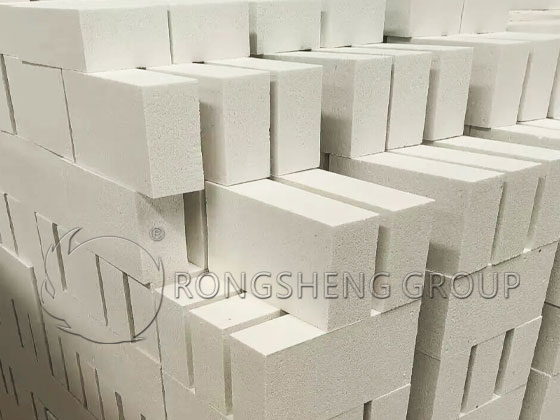
Advantages and Disadvantages of Alumina Bubble Bricks
Advantages
- High temperature resistance and insulation combined: Alumina fiber incurs pulverization and failure at temperatures above 1600℃, while alumina hollow sphere bricks can serve for extended periods.
- Lightweight, reducing the load on the kiln’s steel structure and saving on construction costs.
- Low heat capacity, allowing for rapid heating in intermittent kilns and saving fuel.
- Good chemical stability, stable in oxidizing and weakly reducing atmospheres; high-purity bricks cause almost no contamination of fired products.
- Can be used for load-bearing masonry, suitable for furnace roof arch structures, which fiber insulation materials cannot achieve.
Disadvantages
- Procurement costs are significantly higher than ordinary lightweight bricks and alumina fiber.
- Not resistant to molten slag, direct erosion by molten metal, or strong alkali corrosion.
- Cannot be used in medium- and low-temperature kilns below 1300℃; cost-effectiveness is lower than ordinary insulating bricks.
Rongsheng Alumina Hollow Sphere Bricks
With the development of the times, traditional heavy refractory kilns are undergoing extensive upgrades and renovations. In high-temperature industrial kilns above 1400℃, alumina hollow sphere bricks are gradually replacing high-alumina bricks and mullite lightweight bricks, achieving reduced energy consumption, lighter weight, and longer cycle operation of the kilns.