Selection of Refractory Materials for Aluminum Industrial Furnaces
The aluminum industry—specifically its melting furnaces—is a major consumer of refractory materials. In the United States, it ranks as the second-largest metal industry, following steel. Because aluminum melts at relatively low temperatures, the selection of refractories for secondary (recycled) aluminum melting furnaces is often perceived as less challenging than for other metallurgical processes. However, anyone with practical experience in this field knows that the reality is far from simple.
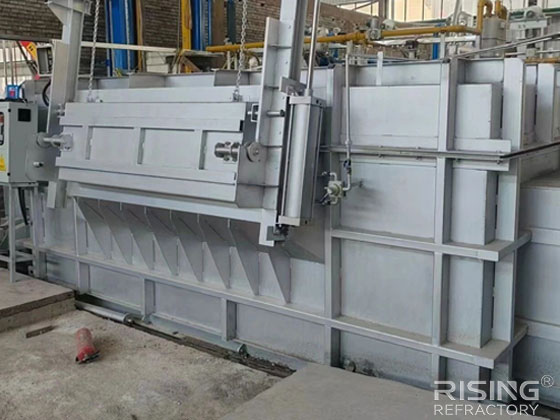
Adding to the complexity, refractories in melting or holding furnaces are increasingly subjected to harsher operating environments, all while facing demands for shorter maintenance downtimes and higher efficiency. Factors such as the types of fluxes employed, the transition to oxy-fuel burners, and the growing reliance on recycled aluminum—which often leads to higher furnace temperatures and the processing of alloys with higher magnesium content—create an increasingly aggressive environment for the furnace lining. This article explores refractory solutions for aluminum melting furnaces, examining the causes of wear and the selection range of available refractory materials for Aluminum Industrial Furnaces.
Wear of Refractory Lining Materials
Aluminum melting and holding furnaces can be divided into several distinct zones based on their exposure environments:
- The upper zone, which encompasses the burner area and the furnace atmosphere.
- The lower zone, which includes areas in direct contact with molten aluminum.
- The upper boundary of the lower zone—often referred to as the “belly band”—connects these two regions and is exposed to the most severe conditions, involving mixtures of molten aluminum, dross, and flux.
Due to their convenience and cost-effectiveness, most furnaces utilize aluminum silicate-based refractory materials. Typically, different materials are selected for the upper and lower zones of the furnace to meet their respective operational requirements. In the lower zone, the refractory material is in frequent contact with molten metal, leading to potential chemical reactions between the aluminum and the lining components. The removal of dross from the furnace walls or hearth can cause mechanical damage, while the charging process often induces thermal shock and mechanical impact. The refractory material in the belly band is particularly susceptible to these challenges. Furthermore, the presence of thermite-type reactions can lead to intermittent, localized high-temperature excursions.
Reactions Between Refractory Materials and Metals
Extensive research has been conducted to understand the reactions and wear mechanisms occurring between refractory materials and molten aluminum. Reactions between aluminosilicates and the metal can lead to the formation of corundum. Although “corundum” is the mineralogical term for Al₂O₃, in this context, it refers to a mixture of Al₂O₃, unreacted refractory fragments, silicon, and aluminum. This alteration typically originates below the furnace’s belly zone and grows upward, compromising the integrity of the lining; it adheres firmly to the refractory material by filling its pores, making it extremely difficult to remove. Cleaning the furnace walls is essential to maintain production capacity, as the formation of corundum adversely affects the thermal properties of the refractory lining.
Thermodynamics can be used to determine the likelihood of reactions between the metal and various mineral components within the refractory material. Both pure silica and the mineral mullite can be reduced by molten aluminum. Corundum is formed through the reduction of silicon dioxide (silica). Furthermore, if the aluminum is an alloy containing magnesium, the magnesium can reduce SiO₂ to form magnesium oxide (MgO) or react with aluminum oxide (Al₂O₃) to form spinel (MgAl₂O₄). (Depending on the magnesium content in the aluminum alloy, either MgO, MgAl₂O₄, or both may form.) Additionally, the oxidation of aluminum can occur whenever oxygen is present.
The reaction mechanisms involve the formation and growth of aluminum oxide, magnesium oxide, and spinel when aluminum alloys come into contact with refractory materials. While these reactions have received significant attention, other oxides—such as iron oxides and titanium dioxide—are also frequently found within refractory materials and can likewise be reduced by molten aluminum.
Control of Aluminum Penetration
Several methods can be employed to address the wetting and penetration of molten aluminum into refractory materials, as well as the subsequent chemical interactions. The objective is to delay or inhibit the ability of aluminum to reduce the refractory components. The following techniques can be used to address this issue.
A common approach involves incorporating non-wetting agents into refractory materials—particularly in calcium aluminate-containing castables—to mitigate the effects of contact with molten aluminum. Frequently cited additives include barium sulfate, various types of fluorides (such as aluminum fluoride or calcium fluoride), and others. Research suggests that barium sulfate functions by forming celsian (barium feldspar) at 1000°C, which acts as a barrier against aluminum corrosion, whereas fluorides operate through chemical reactions and the filling of pores. These non-wetting additives decompose at specific temperatures, beyond which the refractory material loses its protection.
Another method involves the addition of phosphates, which exhibit excellent non-wetting characteristics against molten aluminum and remain stable up to temperatures exceeding 1500°C. Phosphates can be incorporated into the mix prior to firing and serve as binders in castables and plastics. When used in monolithic (unshaped) refractories, they facilitate bonding between new and existing (used) refractory material—a property that is particularly valuable during repair operations.
The use of sol-gel binders—specifically colloidal silica—results in the formation of extremely fine pores, which hinders the penetration of aluminum. This approach either eliminates the need for non-wetting additives or minimizes the quantity required.
Recent research has focused on utilizing specialized raw materials or binders that exhibit low wettability toward aluminum, consisting exclusively of calcium oxide and aluminum oxide—such as calcium hexaluminate or tabular alumina. Microscopic examination of test specimens based on tabular alumina has shown no metal penetration following exposure to molten aluminum. Furthermore, certain castables offer inherent thermal insulation properties, derived from the intrinsic characteristics of their constituent aggregates.
Refractory Material Testing
A recognized method for evaluating how refractory materials perform when in contact with aluminum during service involves simulating actual operating conditions. This entails exposing the refractory material to molten metal at a predetermined temperature for a specified duration. The specific test procedure may vary slightly depending on the geometry of the cavity used to contain the metal.
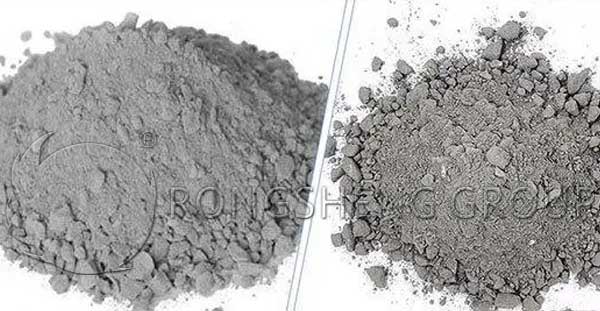
For monolithic (unshaped) refractories, factors such as the pre-firing temperature, as well as the relationship between temperature and firing duration, can vary significantly and may influence the test results. Refractory materials are evaluated against established criteria, which typically include a visual assessment of the extent of metal penetration compared to materials currently in use.
Refractories used in the “belly band” (sidewall) zone are subject to additional stress due to exposure to fluxes. These fluxes—composed of various combinations of alkali metal salts, fluorides, and chlorides—have low melting points and can therefore penetrate the refractory structure. To assess the impact of these fluxes on the integrity and composition of the refractory, laboratory “cup tests” are conducted under conditions that simulate the environment of the belly band. In these tests, the refractory is exposed to an aluminum alloy covered by a layer of salts—such as KCl, CaCl2, NaCl, calcium fluoride, sodium fluoride, or cryolite (Na3AlF6)—at high temperatures.
At high temperatures, these fluxes decompose, releasing gases. Once these salt-derived components are present in the environment, they can penetrate the refractory and react with its constituents. Alkali testing is used to determine whether a new refractory formulation offers improved resistance before it is applied in the field. This can be performed by creating a cavity within a brick or by placing a refractory sample inside a sealed container. The cavity or container is filled with alkali salts and covered to restrict the movement of gaseous species; the assembly is then heated and held at a target temperature for a set period. Afterward, the test specimen is analyzed for penetration and structural changes.
In aluminum melting or holding furnaces, alkalis react with the silicates present in the refractory to form a glassy phase. This phase can seal the pores, thereby preventing further degradation of the refractory material.
Selection of Refractory Materials
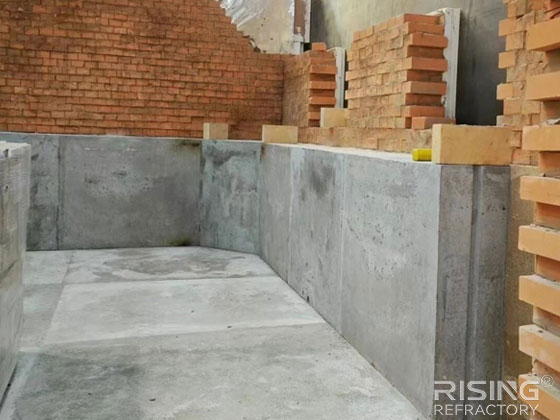
Refractory linings for aluminum melting or holding furnaces can consist of bricks, castables, plastics, or any combination thereof. Phosphate-bonded fired bricks, once common, have largely been superseded by low-cement and ultra-low-cement castables. Brick linings require a labor-intensive, layer-by-layer installation process, and the mortar joints between the bricks are particularly susceptible to damage. Castables offer a faster installation time—though they require a period for drying and curing—and result in fewer joints while providing comparable performance. Plastic refractories are less commonly used than castables. While each type of refractory material possesses distinct characteristics, they can be combined to create an optimal lining in terms of cost, availability, and service life.