Ceramic Fiber Blanket – Slag-Blocking Cotton for Steel Casting
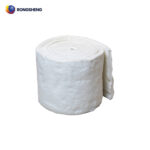
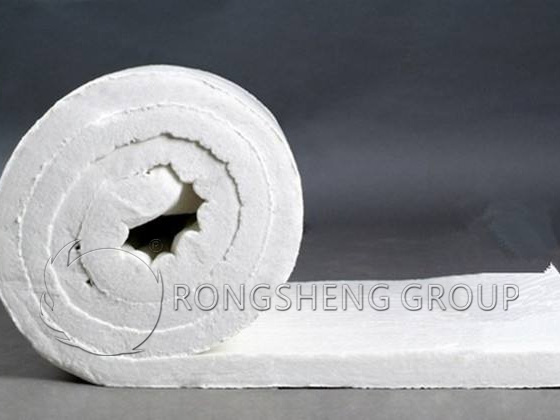
Slag-blocking wool for steel casting. Ceramic fiber blankets can be used as slag-blocking wool for cast steel and cast iron, floating above the molten iron or steel at the ladle opening. The main components of slag-blocking wool are Al2O3·ZrO2·SiO2, with a temperature resistance up to 1430℃. It shrinks slightly when used in molten iron or steel at excessive temperatures, making it a highly cost-effective consumable.
Performance Characteristics of Slag-Blocking Wool
Slag-blocking wool—a ceramic fiber blanket—is a soft, cotton-like felt with very low density and excellent slag-gathering properties. Crucially, it does not contaminate molten steel, and it is a neutral refractory material. When used, it is cut to the appropriate size according to requirements. After being placed on the surface of high-temperature molten steel, it softens and shrinks slightly, but this does not affect its ability to float on the surface and block slag, keeping the molten steel clean for pouring.
Usage Method of Slag-Blocking Wool
During pouring, it forms an insurmountable slag-blocking, slag-filtering, and slag-collecting barrier at the ladle opening, without adhering to the ladle wall. It provides excellent heat insulation, heat preservation, light blocking, and radiation protection. It effectively ensures the purity of the poured molten steel and the safety of the pouring process. After pouring, it can be easily removed.
Slag-blocking wool specifications: 7200*610*20mm/roll, 7200*610*25mm/roll. Cut to the required size with a utility knife when using.
Ceramic Fiber Blanket Manufacturer
Ceramic fiber blankets are produced using continuous manufacturing processes. After needle punching, the fibers are evenly interwoven, resulting in high tensile strength, and they contain no binders. Needle-punched blankets of varying bulk densities and thicknesses provide users with a wide range of material choices to achieve better thermal insulation structures and economic benefits. Ceramic fiber blankets have excellent resistance to chemical corrosion (except for hydrofluoric acid, phosphoric acid, and strong alkalis such as Na₂O and K₂O). The performance of ceramic fiber blankets is unaffected by oil corrosion; their thermal and physical properties can be restored after drying.
Main Technical Specifications of Ceramic Fiber Blankets
- Density: 128 kg/m³
- Thermal Conductivity at Room Temperature: 0.03 W/(m·K)
- Temperature Resistance: 1430℃
- Operating Temperature: -70~1250℃
Advantages of Ceramic Fiber Blankets
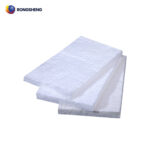
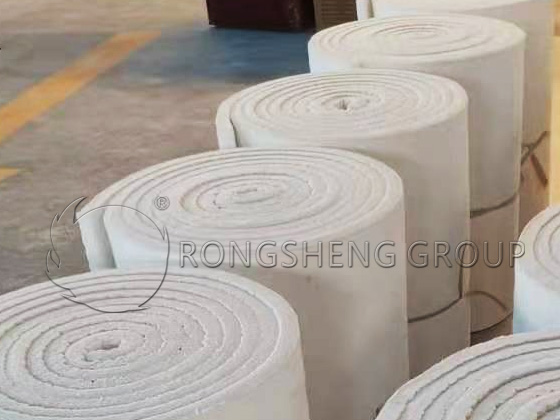
Ceramic fiber blankets are white in color, with regular dimensions, and integrate fire resistance, heat insulation, fireproofing, and thermal insulation properties. They contain no binders or lubricants. Even after long-term use in neutral and oxidizing atmospheres, they maintain good tensile strength, toughness, and fiber structure. Due to their lightweight, environmental friendliness, and energy efficiency, they are now widely used in kilns and other applications.
Strong Thermal Shock Resistance
The product exhibits low shrinkage within its applicable temperature range while maintaining its high thermal insulation, lightweight, and impact resistance.
High Flexural and Tensile Strength
The ceramic fiber blanket is formed during the polishing process, resulting in a relatively tight interweaving of fibers, providing excellent tear resistance and tensile strength.
Low Slag Ball Content
The slag ball content of the ceramic fiber blanket is guaranteed to be below 7%, meeting national quality standards.
Application Areas: Ceramic fiber blankets are commonly used for high-temperature thermal insulation in aerospace, steel, and petrochemical industries. They are also used for fireproofing and insulation of military equipment. Industrial kilns, heating device wall linings, and backing are also used. High-temperature equipment, thermal insulation and fireproofing of electrical components, and high-temperature gaskets are also employed.
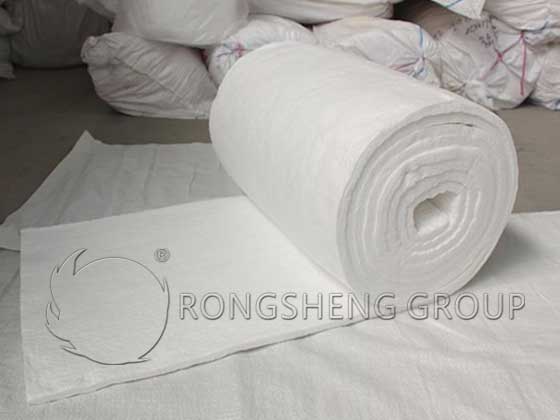
How Flexible is a Ceramic Fiber Blanket?
The flexibility of ceramic fiber blankets is excellent; they can be easily bent and folded by hand. We characterize this flexibility using flexural strength, which reflects the flexibility and durability of the fiber felt.
Flexural Strength
Flexural strength refers to the maximum stress a material can withstand under a bending load or when it reaches a specified bending moment. This stress is the maximum normal stress during bending, measured in MPa (megapascals). It reflects the material’s resistance to bending and is used to measure its bending performance.
The bulk density of ceramic fiber blankets is between 80 and 200 kg/m³, and bulk density affects the flexural strength. Generally, the flexural strength of ceramic fiber blankets should be between 0.5 and 1.0 MPa.