Technical Characteristics and Application Advantages of Lightweight Thermal Insulating Castables
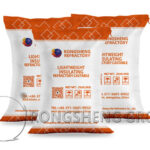
Technical characteristics and application advantages of lightweight thermal insulation and low thermal conductivity castables. In industrial kiln design, lightweight insulating castables are playing an increasingly important role. Based on their bulk density, refractory castables can be divided into three main categories: lightweight (<1.5), semi-lightweight (1.5-1.8), and heavyweight (>1.8). Among these, lightweight castables, with their unique performance advantages, have become the preferred material for energy-saving retrofitting of modern kilns.
The Core Advantages of Lightweight Castables
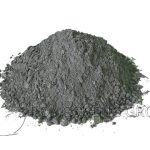
The core advantage of lightweight castables lies in their “lightweight” characteristics. Using a carefully proportioned mix of low-density aggregates and powders, combined with binders such as high-alumina cement or water glass, this material is not only lightweight but also has extremely low thermal conductivity, effectively reducing heat loss from the kiln. In kiln structures, lightweight insulating castables are typically used as an insulation layer, combined with an outer working layer of refractory material to form a perfect insulation system.
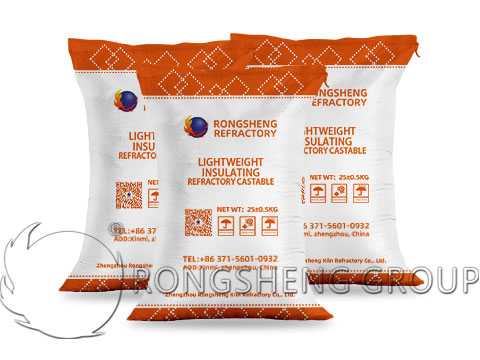
This material offers three major advantages in application:
- Significant Energy Saving: Reduces kiln surface temperature and fuel consumption.
- Convenient Construction: High water content and good fluidity, suitable for complex shapes.
- High Cost-Effectiveness: Lower price than traditional refractory materials, low maintenance costs.
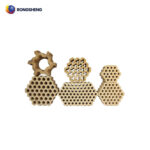
With technological advancements, lightweight insulating castables have broken through traditional application boundaries. For example, acid-resistant lightweight castables with a specific gravity of 1.5 can be directly used for chimney linings, reducing structural load and improving corrosion resistance; alumina hollow spherical castables can simultaneously meet the requirements of high temperature resistance and lightweight design in special lightweight kilns. More importantly, the new generation of lightweight castables, while maintaining traditional advantages, has achieved breakthroughs in thermal shock resistance and service life, providing more possibilities for energy conservation and consumption reduction in industrial kilns. Choosing lightweight insulating castables means choosing a more efficient and environmentally friendly kiln solution.
Low Thermal Conductivity Castables: Technical Characteristics and Application Advantages
Low thermal conductivity castables are a new type of refractory material, distinct from conventional lightweight insulating castables. Their core characteristic is that they maintain low bulk density and thermal conductivity even at high temperatures, exhibiting excellent thermal insulation properties. Unlike conventional lightweight castables, whose bulk density increases with temperature, insulating castable refractory retain their lightweight properties even in high-temperature environments. This technological breakthrough gives them significant application value in the field of industrial kilns.
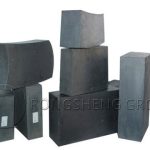
This material achieves a technical unity of low bulk density and high refractory strength, reflecting innovation in material design and preparation processes. It boasts superior overall performance, good resistance to thermal spalling, a long service life, and can be repaired and processed into any shape or used for integral furnace lining construction according to actual operating conditions.
The technical characteristics of low thermal conductivity castables bring multiple benefits to industrial kilns:
- Lightweight Structure. The material’s low bulk density and light weight effectively reduce equipment weight, simplify support structure design, and reduce infrastructure investment.
- Optimized Energy Efficiency. Excellent thermal insulation performance ensures uniform temperature distribution in the furnace, reduces heat loss, lowers energy consumption, thereby reducing production costs and improving economic efficiency.
- Process stability. Technological innovation has resolved the technical contradictions between “high strength, low density, low thermal conductivity, and low shrinkage” under continuous high-temperature conditions, ensuring the structural stability and functional reliability of the material under harsh conditions.
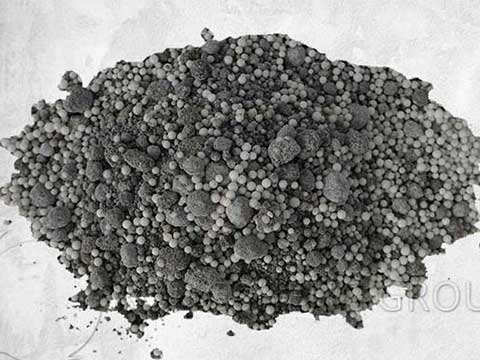
Quality Control and Technology
The performance of low thermal conductivity insulation materials relies on strict raw material control and process optimization. Due to differences in testing methods for the bulk density and compressive strength of lightweight aggregates across different regions, quality control should focus on the following aspects:
First, in addition to routine lightweight aggregate index testing, a systematic inspection of various admixtures, binders, and other auxiliary materials is necessary to establish a complete raw material quality evaluation system. Second, in process design, the selection of aggregate particle size is particularly critical—appropriate particle size distribution helps enhance the compressive strength of the material, but excessively large particles will significantly affect workability and material uniformity.
Therefore, manufacturers need to optimize particle size distribution to ensure both mechanical properties and ease of construction.
Application Areas and Market Positioning
Currently, low thermal conductivity castables are widely used in industrial kilns and thermal equipment in industries such as metallurgy, machinery, power, chemical, and petroleum. Compared to ordinary lightweight castables, their actual energy-saving effect can reach over 20%, resulting in significant economic benefits.
The material performance requirements vary across different application areas. Taking kiln applications in the petroleum and petrochemical industry as an example, this field has more stringent requirements for controlling bulk density, necessitates higher-grade materials, and consequently, higher market prices. This differentiated positioning reflects the maturity and wide applicability of low thermal conductivity castable technology, and also embodies the industry trend of high-end refractory materials developing towards refinement and specialization.
In summary, through innovation in material design and preparation processes, insulating castable refractories have successfully achieved a coupling of lightweight, high strength, and low thermal conductivity, providing a reliable material solution for energy conservation, emission reduction, and long-life operation of industrial kilns. This has significant application value in green manufacturing and sustainable industrial development.