Production Process and Usage Precautions for Steel Fiber Castables
Currently, more and more sectors both domestically and internationally are applying steel fiber castables. In certain thermal applications where ordinary castables are difficult to withstand, especially in areas with frequent thermal shock and severe impact, steel fiber castables are highly effective. Rongsheng steel fiber refractory castables are used in high-temperature vulnerable areas of metallurgical, building materials, and circulating fluidized bed boilers, as well as in other industrial boilers in the building materials industry where good anti-stripping and impact resistance of the refractory materials is required.
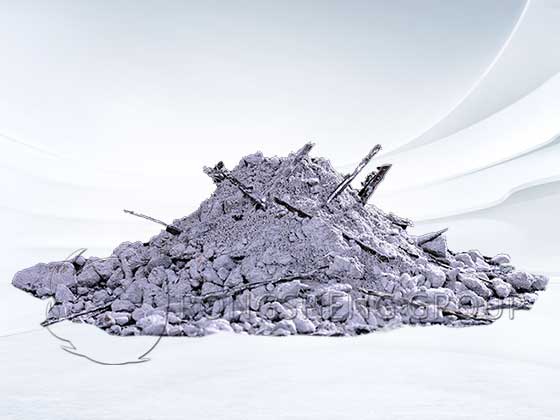
Production Process of Steel Fiber Refractory Castables
The steel fibers used in refractory castables are generally 0.4–0.5 mm in diameter and 25 mm in length, with a crescent-shaped shape and cross-section. The amount of steel fiber added to the castable is 1–5% (by weight), and the length and amount of steel fiber must be appropriate.
Generally, water is added to the mixture first, followed by the steel fibers, and the mixture is thoroughly stirred. This not only ensures uniform mixing but also saves one-third of the mixing time compared to mixing the dry material containing the steel fibers. Molding can be achieved through external vibration or by using a vibrator to vibrate the mixture internally, both methods producing dense products. The curing and drying of steel fiber castables are the same as for ordinary castables.
Characteristics of Steel Fiber Refractory Castables
- Steel fibers enhance the tensile and flexural strength of refractory castables.
- For castables of the same material, the castable with added steel fibers only showed corner chipping after 19 cycles of water cooling to 1100℃, while the castable without steel fibers chipped after only 14 cycles. This proves that steel fibers can improve the thermal shock resistance of castables.
- Steel fiber reinforced refractory castables can still bear loads even after cracking, thus improving the fracture work and increasing the plasticity of the refractory castable.
- Steel fiber reinforced castables can improve the mechanical strength after heat treatment. Using steel fiber reinforced castables can improve the mechanical strength of castables, especially the strength at intermediate temperatures. The compressive strength increases by +41% after firing at 1100℃ for 3 hours. This is because at low temperatures, the castable relies on hydraulic products for strength, while at high temperatures, the hydraulic bonding strength is replaced by ceramic bonding. Therefore, castables have high strength at both low and high temperatures, while at intermediate temperatures, the hydraulic bonding strength is lost due to the dehydration of hydration products, and the ceramic bonding has not yet fully formed. Therefore, steel fibers play an important role at medium temperatures.
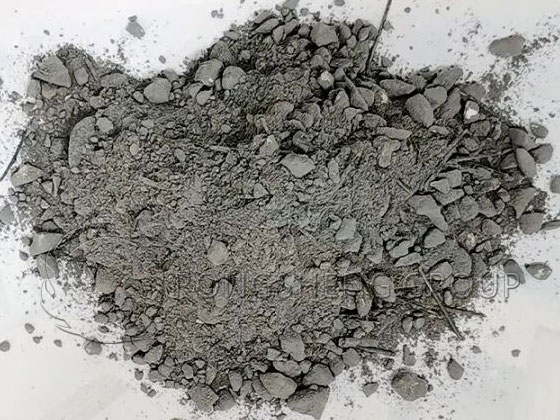
Precautions for Using Steel Fiber Reinforced Castables
Impact of Low Temperature on Steel Fiber Reinforced Castables
- Lower Strength, Reduced Wear and Erosion Resistance
Hydration hardening, medium-temperature sintering, and ceramic bonding of castables all require specific temperatures to fully form. While strength is acceptable at room temperature, it is significantly lower at medium temperatures (300–600℃). Insufficient matrix sintering and poor density lead to reduced erosion and wear resistance of the lining.
- Weak Bonding Force Between Steel Fibers and Matrix, Prone to “Fiber Pulling” Failure
Steel fibers achieve bridging and toughening through a tight bond with the castable matrix. Low temperatures result in insufficient matrix shrinkage and low bonding strength, weakening the bond force on the fibers. Under stress, the steel fibers are easily pulled out, drastically reducing the toughening effect, essentially rendering it equivalent to a fiber-free castable.
- Poor dehydration at medium temperatures easily leads to network cracks
Under low-temperature conditions, the decomposition and drainage of moisture and binder within the castable lining are slow, hindering moisture migration and easily forming network micro-cracks. Once cracks form, the steel fibers become stress concentration points, accelerating localized spalling.
- Steel fiber corrosion and expansion cause lining cracking and bulging
This is the most typical problem under low-temperature conditions. In environments of 100–300℃ with water vapor or humidity, steel fibers rapidly oxidize and corrode, expanding in volume and directly causing the castable lining to crack, bulge, and spall. The lower the temperature and the more humid the environment, the more severe this phenomenon becomes.
- Deteriorated thermal shock stability
At low temperatures, the castable lining itself lacks toughness, and the bond between the steel fibers and the matrix is weak. When encountering temperature fluctuations, the lining is more prone to problems such as chipping, corner breakage, and spalling.
In short, the effects of excessively low temperatures on the performance of steel fiber castables are as follows:
Low temperature → Incomplete sintering of the castable → Decreased strength and wear resistance.
In the medium-low temperature range of 100–300℃ → Steel fibers are prone to corrosion and expansion → Lining cracking, bulging, and peeling.
Long-term service temperature <400℃: Ordinary steel fiber castables are not recommended, as they are prone to rust expansion and cracking.
When steel fibers must be used: Select galvanized or rust-resistant steel fibers and appropriately reduce the dosage.
In low-temperature, humid, and high-vapor environments: Prioritize steel fiber-free wear-resistant castables or plastic castables.
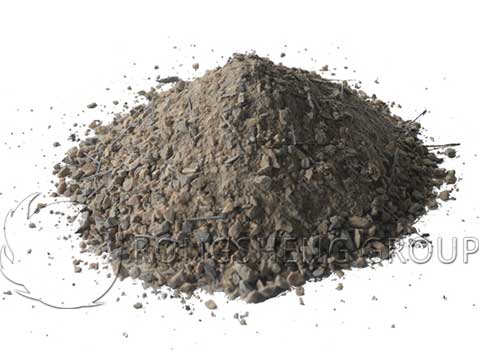
The Effects of High Temperature on Steel Fiber Reinforced Castables
- Commonly Used Steel Fiber Materials and Temperature Limits
- 1) 304 Stainless Steel Fiber (Most Commonly Used): Long-term safe use: ≤1100℃, short-term peak: 1150~1200℃, >1250℃: rapid oxidation, strength loss.
- 2) 310S/2520 Heat-Resistant Stainless Steel Fiber (High-Temperature Type): Long-term safe use: ≤1150~1200℃, short-term peak: 1250~1300℃, >1350℃: significant softening, oxidation failure.
- 3) 446/24Cr High-Chromium Ferritic Fiber: Long-term: ≤1050~1100℃, better oxidation resistance than 304, but high-temperature strength is lower than 310S.
- Temperature Failure Mechanism
- Oxidation: At high temperatures, the Cr₂O₃ protective film is destroyed → the fiber becomes brittle, pulverizes, and loses its reinforcing effect.
- Softening: Approaching the melting point (around 1400℃) → Strength drops sharply, cracks cannot be bridged.
- Reaction with the matrix: At high temperatures, Fe, Cr, and Ni react with the refractory → Localized low-melting phases, increased linear shrinkage.
Suitable service temperatures for steel fiber-reinforced castables:
- Ordinary 304 steel fiber reinforced castable: Recommended long-term temperature ≤1200℃, maximum ≤1300℃.
- 310S high-temperature steel fiber reinforced castable: Recommended long-term temperature ≤1250℃, maximum ≤1350℃.
Above 1350℃, steel fibers essentially fail; use is not recommended.
For conditions with large temperature fluctuations and frequent thermal shocks: Even at lower temperatures, 310S is recommended for its greater stability.
JC/T499-2013 “Steel Fiber Reinforced Refractory Castables”: Performance testing temperature is 1100℃; no higher temperature guarantee is given.