Frequently Asked Questions about Mullite Bricks
We receive numerous inquiries from customers daily regarding mullite bricks. Some are new to the product and want to understand its basic properties. Others have experienced problems after several years of use and want to find the cause. Still others are unsure among several suppliers and want to know how to judge quality. Rongsheng Refractory, a manufacturer, has compiled some of the most frequently asked questions to help you.
What is the difference between mullite bricks and ordinary high-alumina bricks?
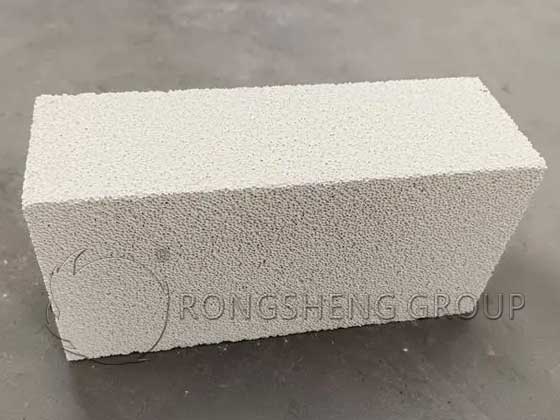
The main crystalline phase of mullite bricks is mullite (3Al₂O₃・2SiO₂). Ordinary high-alumina bricks only meet the standard alumina content; their crystalline phase is usually a mixture of corundum, mullite, and a glassy phase. In practical use, mullite bricks have significant advantages in thermal shock resistance and creep resistance, and exhibit better volume stability at high temperatures, making them less prone to deformation and cracking.
What is a normal Al₂O₃ content in mullite bricks?
Mullite bricks commonly found on the market typically have an Al₂O₃ content between 65% and 75%. Those with less than 60% Al₂O₃ content are generally not considered mullite bricks and may simply be clay bricks containing mullite. Those with more than 75% Al₂O₃ content are usually corundum-mullite bricks, which are significantly more expensive. When selecting a type of brick, don’t blindly chase high prices; choose materials based on the specific requirements of the project.
How to judge the quality of a mullite brick?
There are three simple methods:
- First, observe the cross-section. A dense, uniform texture without obvious layering or large pores indicates excellent molding quality.
- Second, gently tap the brick. A crisp sound indicates sufficient sintering, while a dull sound likely indicates insufficient sintering.
- Third, request measured data on bulk density and apparent porosity from the supplier. A bulk density ≥ 2.6 kg/m³ and an apparent porosity ≤ 18% indicate a qualified product.
At what temperature does mullite brick begin to soften?
The load softening temperature (T₀.₆) of mullite bricks is generally above 1600℃, with good quality bricks reaching 1650℃-1700℃. This indicator reflects the brick’s load-bearing capacity at high temperatures better than Al₂O₃ content. If your kiln operates at temperatures between 1400℃ and 1550℃, mullite bricks are sufficient.
Are mullite bricks prone to cracking? What indicators should be considered?
Cracking is mainly related to thermal shock resistance. Mullite bricks themselves have a low coefficient of thermal expansion (approximately 5.5 × 10⁻⁶/℃ at 20-1000℃), making them more resistant to thermal shock than high-alumina bricks. However, if they have been over-ceramized or the matrix composition is improper, they can become brittle. When selecting a type, you can directly ask the supplier: how many thermal shock cycles can it withstand under 1100℃ water cooling conditions? Generally, ≥15 cycles is considered normal, and ≥25 cycles is considered excellent.
What is the approximate price range for mullite bricks?
The price of mullite bricks varies considerably. Ordinary sintered mullite bricks cost approximately 3,000 to 5,000 yuan per ton. Electrofused mullite bricks are more expensive, costing 6,000 to 9,000 yuan per ton. Low-creep mullite bricks and corundum-mullite bricks can reach over 10,000 yuan per ton. The price is mainly determined by the raw material grade and bulk density. It is recommended that you first determine the operating temperature of your equipment and the specific application location before inquiring about prices from suppliers; this will provide a more accurate comparison.
How to choose between mullite bricks and silicon carbide bricks?
It depends on the operating conditions. Silicon carbide bricks have good thermal conductivity and strong wear resistance, making them suitable for applications requiring rapid heat transfer or subject to severe erosion, such as roller bricks in ceramic roller kilns. Mullite bricks have good thermal insulation and thermal shock resistance, making them suitable for high-temperature working layers or insulation layers. It’s not a matter of which type of brick is better, but rather which is more suitable.
In which kilns are mullite bricks most maturely used?
Mullite bricks have a wide range of applications, with mature use in the following fields: high-temperature zones of shuttle kilns and tunnel kilns in the ceramics industry; regenerator checkerboards and kiln roofs in the glass industry; furnace bottoms and hot blast stoves in the steel industry; cracking furnaces in the petrochemical industry; and linings of various high-temperature electric furnaces. It can be said that mullite bricks are a mainstream choice in the 1400℃-1550℃ temperature range.
What is the typical service life of mullite bricks?
There is no fixed standard for the service life of mullite bricks. It mainly depends on the operating temperature, furnace atmosphere, start-up and shutdown frequency, maintenance conditions, etc. Under normal operating conditions, mullite bricks in the high-temperature zone of ceramic kilns can be used for 2-3 years, while the service life of checkerboard bricks in glass kilns’ regenerators is 3 to 5 years. If used in areas with gentle temperature changes and no strong alkali corrosion, the service life can reach more than 5 years. Regular inspections and timely repairs of any peeling issues can significantly extend the overall lifespan of mullite tiles.
Can mullite tiles be customized in irregular sizes?
Yes. Mullite tiles are generally manufactured using a semi-dry pressing or casting process. Irregularly shaped tiles require molds. The delivery time for standard rectangular tiles is approximately 15-20 days, while irregularly shaped tiles will require an additional 7-10 days for mold making. It is recommended to plan your production schedule in advance and send your drawings to the manufacturer for confirmation of feasibility. Additionally, the unit price for small batches of irregularly shaped tiles will be slightly higher than that for large batches of standard tiles.
What are the Types of Mullite Bricks?
Mullite bricks are high-alumina refractory materials with mullite (3Al2O3·2SiO2) as the main crystalline phase. Due to differences in raw materials, processing methods, density, and applications, they are mainly classified as follows:
Classification by Production Process
- Sintered Mullite Bricks: Made primarily from high-alumina bauxite clinker, with a small amount of clay or raw bauxite as a binder, through high-pressure molding and high-temperature firing. The process is relatively simple and low-cost, but the resulting bricks have finer grains, more balanced performance, and wider applications.
- Electrofused Mullite Bricks: Made from high-alumina bauxite, industrial alumina, and refractory clay, with the addition of a reducing agent (charcoal or coke), melted in an electric arc furnace and then cooled to crystallize. These bricks have coarse grains and a dense structure, resulting in higher high-temperature strength, better thermal shock resistance, and lower porosity. However, the production cost is higher, making them suitable for high-temperature critical components.
Classification by Bulk Density
- Heavy Mullite Bricks (Working Bricks): These bricks have a relatively high bulk density (typically ≥2.5 g/cm³), high refractoriness, high load softening temperature, and good thermal shock resistance. They are mainly used in the working layers of kilns that directly contact high-temperature flames or molten materials (such as hot blast stove roofs, blast furnace bottoms, and glass melting furnace linings).
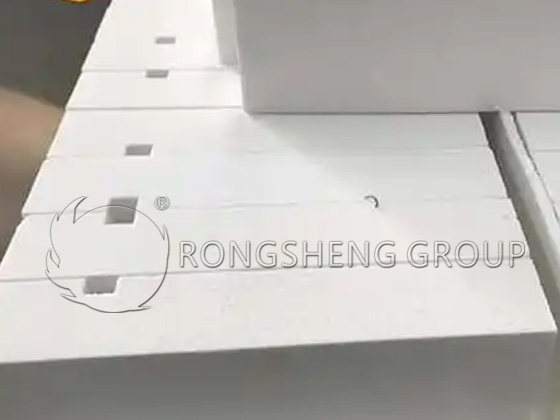
- Lightweight Mullite Bricks (Insulating Bricks): These bricks have a relatively low bulk density (typically between 0.6 and 1.3 g/cm³), and are made using a process that adds pore-forming agents (such as sawdust or polystyrene) or foaming. They have low thermal conductivity, low heat capacity, and good thermal insulation properties. They are mainly used for thermal insulation layers in kilns (such as kiln back linings and flues). Common grades include JM23, JM26, and JM28, which are classified according to alumina content and operating temperature.
Classification by Composition and Composite Material
- Corundum-Mullite Bricks: Introducing a large amount of corundum (α-Al₂O₃) into the mullite matrix, resulting in higher refractoriness (up to approximately 1800℃) and lower high-temperature creep rate. Suitable for harsh environments with higher temperatures and strong erosion (such as rotary kiln firing zones and glass furnace regenerators).
- Zirconium-Mullite Bricks: Introducing zirconium oxide (ZrO₂) into mullite, utilizing the phase transformation toughening effect of zirconium oxide, significantly improving the material’s thermal shock resistance and chemical corrosion resistance. Commonly used in critical parts of glass melting furnaces.
- Other Composite Bricks: Such as mullite-silicon carbide bricks (enhancing wear resistance and thermal conductivity, used in high-wear furnace parts), mullite-magnesium aluminum spinel bricks (introducing a microcrack structure to improve thermal shock resistance), etc.
Classification by Service Temperature
- Basic Temperature Resistant Type (e.g., Type 1350): Suitable for medium and low temperature insulation layers.
- Medium- and high-temperature suitable types (e.g., type 1450): Suitable for insulation in medium- and high-temperature zones or medium-temperature working layers.
- Ultra-high temperature suitable types (e.g., type 1550): Suitable for insulation in high-temperature zones or high-temperature working layers, requiring a higher alumina content (71.8%~77.3%).
Classification by application and shape
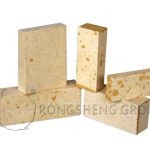
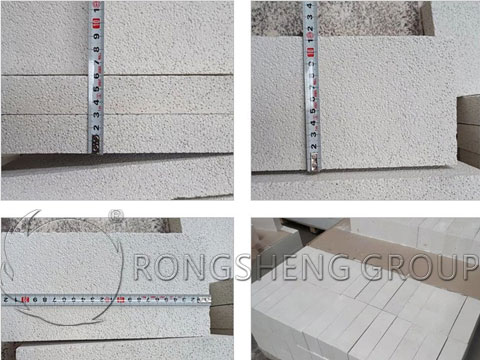
- General-purpose standard bricks: Standard sizes (e.g., 230×114×65mm), suitable for large-area masonry.
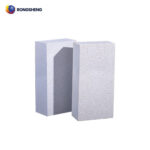
- Irregularly shaped bricks: Such as knife-edge bricks, axe-shaped bricks, wedge-shaped bricks, etc., used to adapt to kiln body curves and joints.
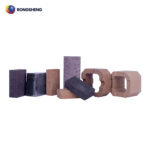
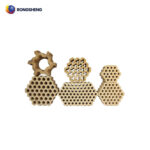
- Specialty bricks: Such as burner bricks, checker bricks, kiln mouth protective bricks, cooling zone wear-resistant bricks, etc., designed for specific parts of the kiln.
The above are some questions and answers about mullite bricks. If you have any further questions, please feel free to contact us for discussion.