Dry Vibratory Feed Refractory for Tundish
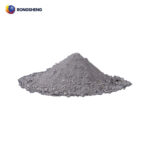
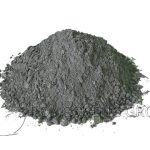
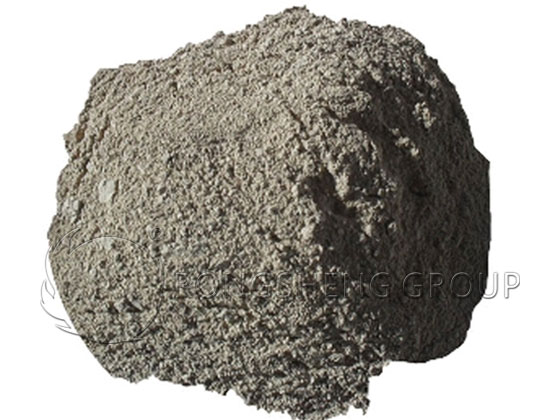
What are tundish dry vibratory refractories? tundish refractory. Tundish dry vibratory refractories are monolithic refractory materials formed by vibration without the addition of water or liquid binders. Under vibration, the material forms a dense and uniform whole, which gains strength upon heating using thermosetting binders or ceramic sintering agents. Dry vibratory refractories consist of refractory aggregates, powders, sintering agents, and additives. Their characteristics include: easy flow under vibration; the powders can fill the tiny pores between particles even under very small vibration forces, resulting in a dense body with high filling density. During use, heating forms a working surface with a certain strength, while non-working surfaces remain partially unsintered, retaining the original dense packing structure. This structure helps reduce stress caused by expansion or contraction, helps prevent crack propagation and extension, helps prevent the intrusion of molten metal, and facilitates unpacking and cleaning. This material is installed on-site using vibration methods, which is simple, has a short construction period, and allows for direct and rapid heating to sinter the working layer before use.
Intermediate ladle dry vibratory binders are available in magnesia and magnesia-calcium varieties. tundish refractory. Since dry binders are non-aqueous, the choice of binder is particularly important. The binder should be anhydrous, not react with magnesia at room temperature, and possess sufficient strength for demolding after heating to 200-300°C. At a high temperature of around 1550°C, the dry binder can sinter into a solid whole, ensuring its high-temperature performance.
What are the advantages of dry vibratory refractory material for tundishes?
Dry vibratory refractory material for tundishes combines the advantages of insulation boards and coatings, as follows:
- (1) Strong resistance to molten steel and slag corrosion, significantly improving the service life of the working layer. It allows for long-term casting, reducing refractory material consumption per ton of steel.
- (2) Dry vibratory refractory material is sintered gradually from the working layer to the permanent layer during use, forming a dense structure on the hot surface of the working layer. This prevents through-cracks that could cause slag to seep into the permanent layer. The lower density of the unsintered layer is beneficial for tundish insulation.
- (3) Slight shrinkage occurs during sintering, making it easy to turn over and remove the ladle.
- (4) Convenient construction, waterless construction, and can be used directly after rapid baking or without baking. This increases the utilization rate of the tundish, extends its service life, and reduces the number of spare ladles.
- (5) Because dry vibratory refractory material contains no moisture, it reduces the chance of secondary oxidation of the molten steel in the tundish, decreases hydrogen absorption in the molten steel, reduces contamination of the molten steel, and improves the quality of the billet. (6) Compared with spray paint and coating materials, using dry vibratory binder reduces energy consumption during ladle baking, lowers labor intensity, and increases labor productivity. Generally, coatings require baking at 800-1000℃ for 2-6 hours. Dry vibratory binder, however, only requires baking at 200-300℃ for 45-90 minutes to cure the binder. The equipment is simpler, and the construction is more convenient.
- (7) Dry vibratory binder has a longer service life, generally exceeding 20 hours, and in some cases reaching 60-70 hours. This significantly improves labor productivity in the steelmaking process.
What are the organic binders used in dry vibratory feedstocks for tundishes?
Organic binders used in dry vibratory feedstocks for tundishes mainly include phenolic resin and glucose. Thermoplastic phenolic resin, also known as linear phenolic resin or No-volac resin, is produced by the polycondensation reaction of industrial phenol and formaldehyde under the action of an acidic catalyst. Thermoplastic phenolic resin is mostly solid and is a high molecular weight organic compound. Thermoplastic phenolic resin does not harden itself under heating conditions; it only reacts with heat after the addition of the hardener hexamethylenetetramine to form a cured resin with a three-dimensional network structure.
What are the inorganic binders used in dry vibratory feedstocks for tundishes?
Inorganic binders include polyphosphates (sodium tripolyphosphate and sodium hexametaphosphate), solid water glass, and boric acid. Inorganic binders do not introduce carbon and do not increase the carbon or hydrogen content of the molten steel, meeting the needs of smelting steel grades with relatively low carbon content. During baking, they do not produce irritating odors such as phenol or formaldehyde, and are environmentally friendly. It exhibits good erosion resistance, is easy to disassemble, and its bonding strength and medium-temperature strength meet both demolding and usage requirements, thus extending the service life of the tundish.
What preparations are needed before dry refractory tundish construction?
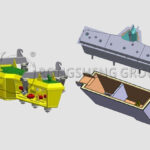
- (1) First, clean the mold thoroughly and brush a layer of graphite powder mixed evenly with machine oil or water around its perimeter. Then allow the mold to air dry naturally. Install a properly functioning vibratory motor on the mold at the required positions. After installation, carefully check for secure fasteners to prevent loosening during use.
- (2) Construction can only begin when the tundish temperature drops below 50℃. The permanent layer must be thoroughly cleaned, free of residual dry refractory or dust, and water must not be sprayed into the tundish.
- (3) Prepare the required dry refractory material.
Construction Sequence of Dry Material in Tundish
- (1) First, install the sprue seat bricks in the tundish, ensuring their upper surfaces are on the same plane. Then, evenly pour the dry material into the bottom of the tundish and tamp it firmly around the sprue seat bricks. Tamp layer by layer or use a plate vibrator to compact the bottom material. The material height should be slightly higher than the upper surface of the sprue seat bricks. This ensures sufficient contact between the mold and the bottom material.
- (2) After the bottom construction is complete, place the mold into the tundish, ensuring the gap thickness between the mold and the permanent layer is the same on both sides.
- (3) Evenly pour the dry material along different positions on the sidewalls, simultaneously using a vibrator to drag around the mold to ensure sufficient air release and reduce material segregation during mold vibration.
- (4) Construct layer by layer until the dry material fills the entire gap and its height is higher than the permanent layer height.
- (5) Start the vibrator motor inside the mold and vibrate for 5-10 seconds. Then, use an auxiliary manual vibrator to vibrate the tundish once.
- (6) Add dry filler to fill the gaps left by vibration, and fully compact or tamp the top dry filler.
- (7) Ignite the burner inside the mold for heating, controlling the mold temperature between 200~300℃. Heating time is 1~2 hours to allow the low-temperature binder in the dry filler to fully solidify.
- (8) After the mold cools, use a crane to remove it, taking care not to damage the working liner edge during removal.
- (9) Before use, directly bake over a high flame for about 1 hour, reaching above 1000℃, before use.
Rongsheng Long Life Refractory Factory supplies high-quality refractory lining materials for intermediate ladles. Contact Rongsheng for free samples and quotations.