Does the Thermal Insulation Performance of Lightweight Insulating Bricks Vary Depending on Their Density?
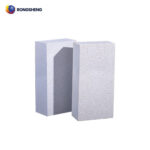
The primary function of lightweight insulating bricks is to provide thermal insulation, and their insulation effect varies depending on the brick’s density.
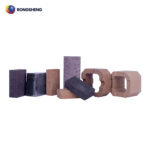
Lightweight insulating bricks are available in various materials and densities. The main classifications are:
- Lightweight clay insulating bricks: Bulk density generally between 0.6 and 1.2 g/cm³.
- Lightweight high-alumina insulating bricks: Bulk density typically between 0.6 and 1.2 g/cm³.
- Mullite lightweight insulating bricks: Bulk density generally between 0.8 and 1.2 g/cm³.
- Alumina hollow sphere insulating bricks: Bulk density generally between 1.0 and 1.2 g/cm³.
These classifications reflect the performance characteristics and usage requirements of lightweight insulating bricks in different application scenarios.
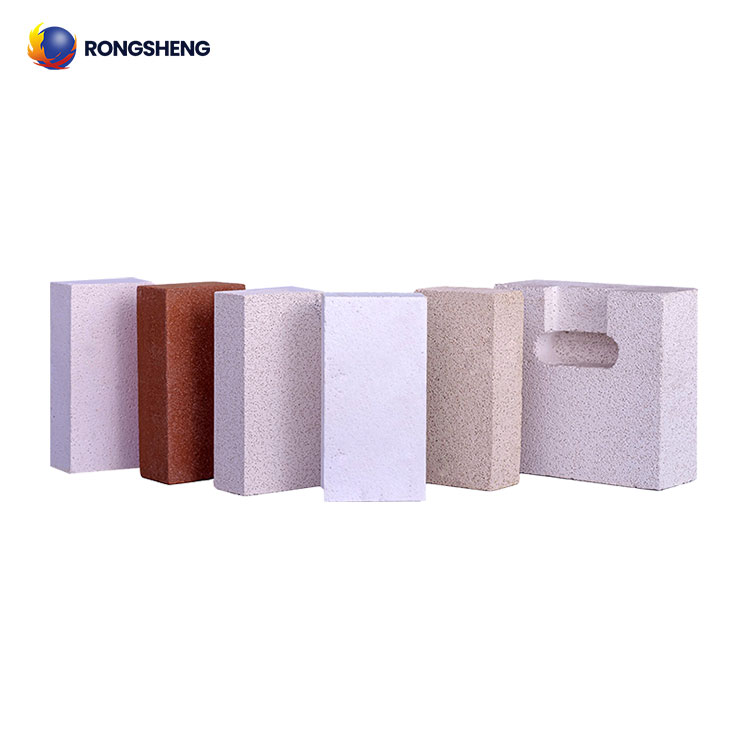
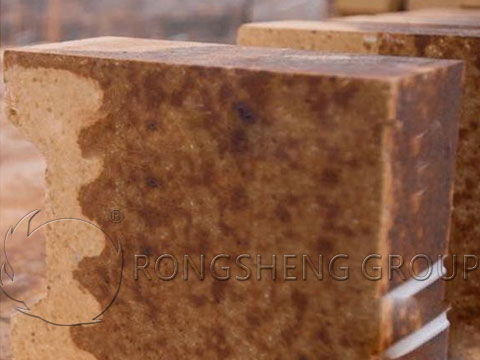
Rongsheng Lightweight Insulating Bricks
Currently, lightweight clay bricks are widely used. For insulation layers with different temperature requirements, appropriate materials of insulating bricks need to be selected. For example, when the temperature reaches 1000℃, clay insulating bricks can be used. If the temperature rises to 1300℃, high-alumina lightweight insulating bricks are required. For high-temperature insulation layers above 1350℃, mullite insulating bricks are a more suitable choice. Furthermore, in some lightweight kilns, lightweight bricks are also used for the inner lining working layer to reduce the weight of the kiln body; in this case, alumina hollow sphere bricks are an ideal choice.
Whether clay, high-alumina, or mullite insulating bricks, they are available in different density specifications such as 1.0, 1.2, 0.8, and 0.6. Generally, the lower the density, the better the insulation effect. The density of alumina hollow sphere insulating bricks is usually 1.2 and 1.0. However, in some special furnace lining constructions, it may be necessary to select insulating bricks with slightly higher strength. Because if the density is too low, the heavy bricks in the working layer may wear down the lightweight insulating bricks during use, causing them to crack and affecting the insulation effect.
The price of insulating bricks varies depending on their density. The lower the density of the insulating brick, the lower its thermal conductivity, resulting in better insulation and more effective fuel savings during kiln operation, thus reducing production costs. However, the lower the density, the higher the raw material cost, and therefore the higher the price. When selecting lightweight insulating bricks, their strength must also be considered. The lower the density, the lower the strength. If the density of the heavy bricks in the working layer is high, the density of the lightweight insulating bricks must be considered as well. If the density of the lightweight insulating bricks is too high, resulting in poor insulation, then insulating bricks of better quality and lower density should be selected to construct the insulation layer. Otherwise, the heavy bricks may wear down the insulating bricks, leading to a decrease in insulation performance or even causing the heavy bricks to shift, requiring replacement and repair of the entire kiln lining.
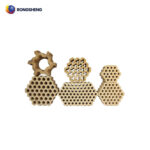
However, if alumina hollow sphere bricks are used in the working layer, there is no need to worry about the density being too low. Alumina hollow sphere bricks not only have insulation properties but can also directly contact the flame, reducing the complexity of the insulation and heavy-duty layers, thus providing both insulation and functional benefits.
Therefore, the density of lightweight insulating bricks does indeed affect their insulation performance. When selecting bricks, the most suitable insulating material should be determined based on the specific temperature requirements of the kiln.
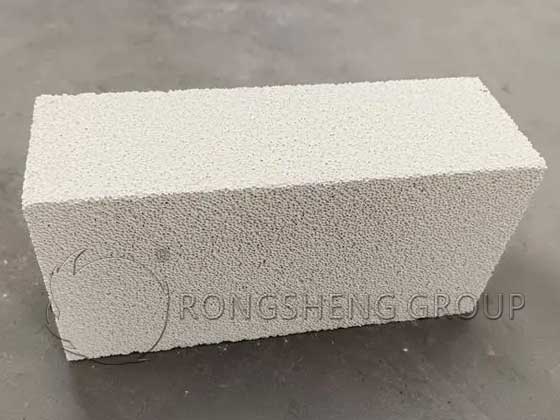
Can Mullite lightweight bricks be used in furnace linings in direct contact with the flame?
Mullite lightweight bricks are known to be used in insulation layers for heat preservation and energy saving. However, in furnace linings with low corrosiveness, they can be used in the working layer (the area directly in contact with the flame).
JM23, 26, 28, 30, and 32 bricks can all be used in direct contact with the flame for neutral furnace linings. JM30 and 32 bricks, in particular, like alumina hollow sphere bricks, can be used in high-temperature sections. Moreover, they provide insulation and are lightweight, making them even more effective in lightweight kilns.
Currently, the bricks used for insulation layers on the market are clay lightweight bricks and high-alumina lightweight bricks, with clay lightweight bricks being the most commonly used. Because the thermal conductivity of lightweight bricks and mullite lightweight bricks is not significantly different, it is sufficient to select lightweight bricks with appropriate material density at suitable temperatures.
Lightweight mullite bricks are high-end insulation materials. Even at high furnace temperatures, selecting lightweight mullite bricks with different densities and operating temperatures can achieve the same effect of insulation and energy saving. In some special furnace lining applications, especially where lower furnace external temperatures are required, lightweight mullite bricks can be used for both the insulation layer and the bricks in direct contact with the flame.
However, lightweight mullite bricks are unsuitable for the working layer of some strong acid and alkali furnace linings. Under highly corrosive conditions, the bricks’ strength is insufficient, and corrosive slag will penetrate them. However, alumina hollow spherical bricks can be used.
Currently, lightweight mullite bricks are mostly used in the insulation layer. Under conditions where the furnace external temperature requirement is low, and the temperature and environment are suitable, lightweight mullite bricks can be used, and multi-layer construction is also possible. JM23 is used close to the furnace shell, while JM28, 30, and 32 can be used in the flame area.
Application Case of Low Thermal Conductivity Multilayer Composite Mullite Bricks in Cement Rotary Kilns
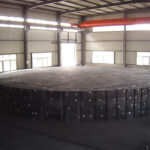
A cement company achieved good energy-saving results using low thermal conductivity multilayer composite mullite bricks in the transition zone of a Φ4m×60m rotary kiln. Initially used in the 18-38m section, after one year of use, the brick thickness in the 18-28m section exceeded 140mm, while the thickness in the 28-38m section remained largely intact. Before use, the average cylinder temperature was above 330℃; after use, the average cylinder temperature was below 270℃. The company then applied low thermal conductivity multilayer composite mullite bricks to the 38-48m section. During the annual maintenance, the composite bricks in the 28-48m section remained largely intact, and the average cylinder temperature remained below 270℃. The advantages of using low thermal conductivity multilayer composite mullite bricks in cement rotary kilns are as follows:
Although the direct cost of using low thermal conductivity multilayer composite mullite bricks is higher than that of silica-mullite bricks, it solves the problems of high cylinder temperature and excessively high temperature of the second-stage support roller bearings. This not only reduces coal consumption and lowers the power consumption of the rotary kiln, but also reduces emissions of carbon dioxide, sulfur dioxide, and nitrogen oxides. It extends the service life of refractory materials and reduces tire wear and cylinder deformation rates. Overall, replacing silica-mullite bricks with low thermal conductivity multilayer composite mullite bricks lowers production costs and reduces the environmental impact of production.